• Home
  • AV/E-Texts
  • History
  • Icons/Fansites
  • Links
  • Novels
  • Original Sources and 19th C. Texts
  • Podcasts
  • Social Customs During The Regency Era
  • Teacher/Student
  • Writer and Literature Resources

Jane Austen's World

This Jane Austen blog brings Jane Austen, her novels, and the Regency Period alive through food, dress, social customs, and other 19th C. historical details related to this topic.

Feeds:
Posts
Comments
« The Dependable Cabbage in the 18th and 19th centuries
The Pump Room Trio Interviewed »

A Short History of Floors

December 5, 2011 by Vic

Wood floors of Brunswick House

In researching floors and floor coverings of Georgian houses, I came across these interesting tidbits of information.

During the middle ages, the floors of simple peasant households consisted of dirt. Hay and straw were strewn on top of the surface, and often cow dung and household wastes were tossed on top of the rushes. This mixture was trampled upon by the inhabitants. (During the middle ages, animals often shared the house with their human owners.) The result was a surface that became as hard as cement over time. Around the 1100s, saltpeter (potassium nitrate) was used for gunpowder, and the floors of former peasant homes provided a good source for this mineral. Mint was used as a deodorizer to cover the smell of the floors, for walking around the room and tramping onthe herb helped to spread its scent.  (A Not So Boring History of Flooring)

The interior of this Irish cottage shows the rough dirt floor. This image was taken in the late 19th century

Concrete floors were also widespread. They were made by plastering a concrete preparation over reeds that were fastened to joists. When this substance dried the concrete assumed the character of a slab of unbroken stone which was strong enough to bear a heavy load without the aid of supporting joists. This hardy substance was both fireproof and long lasting.

Pigs shown entering the Irish cottage. Late 19th century

Concrete floors eventually began to be replaced with wood floors during the Middle Ages.

We are not able to find any distinct records of wood having been employed for the boarding of the floors of dwelling-houses until towards the latter part of the middle ages, when an upper story began to be attached to middle-class houses in consequence of the increased value of land. The most abundant specimens of these early wooden floors are to be met with in London, probably for the reason that land being of higher values there than elsewhere, upperstoried houses wore more common. The name of 1′ lofts” was given to these upper storied rooms on their first introduction, from whence we have the compound word sentence of “up-a-loft,” and the word “cock-loft” has, probably, the same derivation, for wo find it now to be occasionally employed in some of the villages in the Midland counties to signify an up-stairs bedroom.- Building News and Engineering Journal, Vol 41, 1881

Wood floor planks were rough at first, and hand planed and hand finished with stone or metal. Old growth trees allowed for the maximum wood plank width (about 1-2 feet), which minimized the work required to cover a floor surface. In the 18th century, floorborads were irregular in shape and ranged in size and length. The goal was to use the smallest number of boards to cover a surface. More formal rooms used narower floorboards, indicating the wealth of the family who could afford to pay for the extra hours that craftsman took for the smaller sized boards.
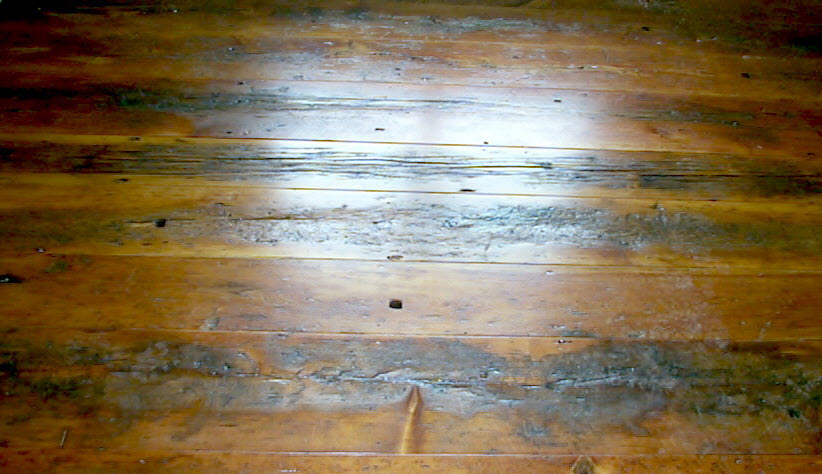
Antique hemlock flooring with nail holes and saw marks.

Narrower floor boards general adoption gained rapid foothold during the Industrial Revolution after the repeal of duties place on foreign timber and the introductionof steam-powered planing machinery. In the early 1800s, production for such boards increased. The irony is that today wider floorboards have become a status symbol, for they have become more valuable as old growth trees have become scarce.

Wood floors had a variety of finishes. They were left unpainted and scrubbed with a mixture of sand and herbs. They were lymewashed, or oil painted in solid colors and stenciled. The floors were not sanded or washed or varnished during this early period. At a  later time varnishes and stains were applied to help make the wood last longer.

This charming watercolour by Diana Sperling shows the bare wood floor. It was the custom during this period to roll up the carpet and shove furniture aside for impromptu casual dancing.

In the mid 1800s decorated floor tile floors became popular in Europe. They had been used in Turkey, the Middle East, and in Dutch houses during the 1600s, and can be readily seen in Dutch interior paintings.

Floors were covered with a variety of rugs: rag rugs made of old bits of cloth; oil cloths; marble cloths; floor cloths, which were often painted to resemble carpets; and Persian rugs for the wealthy, which were prized for their color, design, and durability. Floor cloths were used in fine homes in France in the 14th century and made their appearance in England in the 17th century. Designs were often painted on them, as this U.S. example from Lakeport Plantation shows:
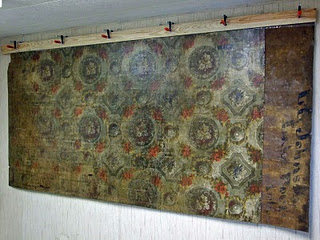
Floor cloth sample from Lakeport Plantation
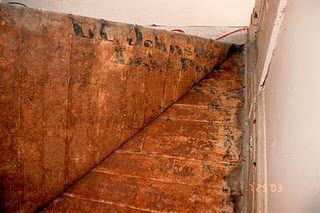
One can see from this example how sturdy the cloth was after treatment.

Another fascinating fact is that rubber floors were used as far back as the 13th century and remained popular until the 1600s. In 1863, Frederick Walton, an English rubber manufacturer, patented linoleum, which is still made in the same way today.

Interesting fact: From ‘besom’ to broom

To sweep floors during the Middle Ages, the British used a ‘besom’ – a handful of twigs with the leaves attached. Besoms were often made of twigs from the ‘broom scrub,’ and so the sweeping implements came to be called ‘brooms’ around AD 1000.

More on the topic:

  • A Not So Boring History of Flooring
  • Lakeport Plantation
  • Irish Peasants, 1897
About these ads

Share with others:

Like this:

Like Loading...

Posted in 18th Century England, 19th Century England, Architecture, Regency Life | Tagged Georgian interiors, History of Floors | 13 Comments

13 Responses

  1. on December 5, 2011 at 11:12 Alan Ford

    As well as common dirt, sand and dung it was not unusual to use blood (commonly pig) as a bonding agent to give a hard and indeed relatively smooth glossed surface to an earthen floor. Other products from the abattoir that made good and very hard wearing flooring material for relatively little cost included animal knuckle bones (principally from cattle). During the post medieval period industrial buildings were often furnished with flooring made of thin pine planking bound in pitch. This last, I can attest, is particularly resilient having broken my trusty trowel, a number of jack hammer bits and a mattock trying to take one apart on an archaeological site.


    • on December 5, 2011 at 11:24 Vic

      Alan, thank you for this interesting and valuable information. I was literally floored when I learned that animal products helped to make such sturdy floors. But this makes sense. Vic


  2. on December 5, 2011 at 11:40 Andrew Capes

    A very interesting subject; to me, especially, as I am just in the middle of laying a solid oak floor in my bedroom. One question about wood floors: when did the use of tongue-and-groove boards become general? It would have transformed the integrity, strength and evenness of floors, making them especially suitable for dancing …


    • on December 5, 2011 at 11:45 Vic

      Andrew, in the 19th century after the invention of the grooving saw. Here’s an interesting passage from a 1915 source: http://books.google.com/books?id=4mNBAQAAIAAJ&pg=PA35&dq=tongue+and+groove+boards+history&hl=en&ei=g9HcTtjaF8jX0QGC1J2jCQ&sa=X&oi=book_result&ct=result&resnum=1&ved=0CEAQ6AEwAA#v=onepage&q&f=false


  3. on December 5, 2011 at 13:57 Arnie Perlstein

    Here is another unexpected but important aspect of the history of floors, from the special point of view of a Janeite:

    http://sharpelvessociety.blogspot.com/2010/02/mr-floorisrather-low-in-our-estimation.html

    http://sharpelvessociety.blogspot.com/search?q=Floor+estimation

    Cheers, ARNIE


  4. on December 5, 2011 at 14:06 Cheryl S.

    Whew!!! Great Post!
    I’ll never take for granted my floors ever again….Never!


  5. on December 5, 2011 at 14:38 Rose McGuinn

    Fascinating reading! I’d always assumed floor boards must have been varnished in Jane Austen’s era. Come to find out, that was never the case at all! I really enjoyed this post.
    Rose


  6. on December 5, 2011 at 14:44 Gayle

    I can only imagine the stench from pigs inside a house.

    Thanks for a very informative article, Vic.


  7. on December 5, 2011 at 20:19 Sherry

    Fascinating reading. One can only imagine in all the rushes and straw on the floor the fleas, rodents and bugs in it. Must have been a smelly mess too if animals were allowed in and garbage thrown on the floor. It makes me appreciate my floors!


  8. on December 6, 2011 at 03:11 Jen

    Fascinating. And the styles are still changing – in my lifetime my parents hated wood floors as it reminded them of the depression era they grew up in and only the very wealthy could afford rugs. Because of this, I lived in wall-to-wall carpet all my life in various abodes until recent years when I ripped up carpets to reveal and expose plain wood floors that I love. Your study shows an interesting evolution in humans environmental adaptations along with changes in style and taste.


  9. on December 6, 2011 at 13:43 Shelley

    As a writer, I find the shocking contrast highlighted by those very interesting photographs reminds me of that classic painting (anyone know the title?) in which the floor of a house full of wealthy people is being punched through from below by the semi-starving working class invisible to them.


  10. on December 6, 2011 at 22:33 Martha

    And I thought MY floors were dirty! Ha! ;)


  11. on March 13, 2012 at 17:17 Kate Dolan

    Thank you for giving me so much to think about. I remember being quite surprised visiting a very elegant house in Charleston SC years ago and seeing dirty-looking, unfinished floors. The docents said that people tracked in so much muck from the streets, no one bothered to try to make the floors nice – they just ignored them. This made sense and fits with the instructions in Hannah Glasse’s servant’s directory regarding sweeping floors with sand and herbs. I always have to fight a tendency to include my contemporary assumptions when I’m looking at things of the past – I expected shiny varnished floors!


Comments are closed.

  • Enter your email address to subscribe to this blog and receive notifications of new posts by email.

    Join 3,080 other followers

  • Notice: Comments

    Due to SPAMMERS, I will no longer accept comments on posts that I published over 30 days ago. In some instances, I will remove links from comments as well.

    I regret having to take this action.

  • Blog Stats

    • 6,241,773 hits
  • Pin It!

    Follow Me on Pinterest
  • Downton Abbey Season 3 Articles

    untitled

    Click on banner image to see this season's schedule

    SEASON THREE ARTICLES

    ~ Review of Episode 6: Oh, how the mighty have fallen

    ~ Review of Episode 5: The Earl's Gone Off His Rocker and Book Giveaway

    ~ Beauty Lessons Learned from Downton Abbey

    ~ Review of Episode 4: Let the grieving begin '

    ~ Review of Episode 3: Not Enough Noses Out of Joint

    ~ Review of Episode 2: Being Tested Only Makes You Stronger

    ~ Say Yes to the Dress, Episode 2 Poll

    ~ Review of Episode One: The Mouse that Roared

    ~ 1920s Fashions

  • Downton Abbey Season 2 Articles

    Click on the banner to go to PBS Masterpiece Classic

    SEASON TWO ARTICLES

    ~ Watch Downton Abbey Season 2 Online

    ~ Viewers of Downton Abbey Season 2: How Did You Like the Christmas Ending?

    ~ Downton Abbey Season 2 Finale:Tonight you're mine completely

    ~ Highclere Castle Floor Plan: The Real Downton Abbey

    ~ The Flu Pandemic in Downton Abbey

    ~ Downton Abbey Season 2:Teagowns and Relaxation

    ~ Downton Abbey Season 2 Review:Coupling

    ~ Downton Abbey: Preview of Season 2

    ~ The Symbolism of the White Feathers

    ~ World War One Guide to Rats, Shell Shock, and Barbed Wire

    ~ Country houses in medical service

  • Downton Abbey Season One Posts on this blog

    Click on image to enter PBS's site.

    READ THIS BLOG'S ARTICLES ABOUT DOWNTON ABBEY:

    • ~ Watch Downton Abbey Online
    • ~ Downton Abbey: Preview of Season 2
    • ~ Entertaining visitors in an English country house, such as Downton Abbey
    • ~ Downstairs in Downton Abbey: The Servants
    • ~ Upstairs in Downton Abbey: The Three Crawley Sisters
    • ~ The Jane Austen Connection to Downton Abbey and Egypt
    • ~ Downton Abbey's Recycled Costumes
    • ~ Everything You Wanted to Know About the Entail in Downton Abbey, and More
    • ~ The Foxhunt: From Downton Abbey Back to Its Origins
    • ~ The Servants Quarters in 19th Century Country Houses Like Downton Abbey
    • ~ Would You Care for Weak Tea or Strong Tea? How the Dowager Countess of Grantham Served Tea to Her Guests
    • ~ The Duties of a Valet
  • The Obituary of Charlotte Collins by Andrew Capes

    Click on image to read the story.

  • Bookmark

    Add to DeliciousAdd to DiggAdd to FaceBookAdd to Google BookmarkAdd to MySpaceAdd to NewsvineAdd to RedditAdd to StumbleUponAdd to TechnoratiAdd to Twitter
  • Links to Jane Austen Blogs

    My links page was updated May 2013 and I have removed all the dead links. Topics include Regency fashion, historic foods, Jane Austen societies, British sites, related topics. Click on image.

  • Find Jane Austen on Google

  • Tweet
  • Jane Austen Today, My Other Blog

  • Randolph Macon Talk

    The Marriage Mart
  • This blog has no commercial purpose

    Any ads you see are placed here by Wordpress. I make no profit off my blog. I do receive books and DVDs for review.
  • Jane Austen’s Advice for Writers

    Click on image to read the article.
  • Doctors and Medical Care in the Regency Era

    Click on image.
  • Join Me on Twitter

  • Twitter Updates

    • @delightfulrepas I was appalled at the woman's decision to change her baby's diaper on a dirty floor. What's wrong with her car? #Starbucks 1 day ago
  • Join me on Facebook

    Vic Sanborn

    Create Your Badge
  • Hello, my name is Vic and I live in Richmond, VA. I work in program and professional development at Virginia Commonwealth University, and I have adored Jane Austen almost all of my life. I am a proud lifetime member of the Jane Austen Society of America. This blog is a personal blog written and edited by me. I do not accept any form of cash advertising, sponsorship, or paid topic insertions. However, I do accept and keep books, DVDs and CDs to review.

    Contributors to this blog include: Tony Grant and Shelley DeWees.

    If you would like to share a new site, or point out an error, please email me. (Yes, I am fallible. I'll own up to my mistakes and will make the corrections with a polite smile on my face.) Write me at

    Spam protecting image courtesy: Nexodyne.com

    Thank you for visiting my blog. Your comments and suggestions are most welcome.

  • Copyright Statement

    © Vic Sanborn and Jane Austen's World, 2010. Unauthorized use and/or duplication of this material without express and written permission from this blog’s author and/or owner is strictly prohibited. Excerpts and links may be used, provided that full and clear credit is given to Vic Sanborn and Jane Austen's World with appropriate and specific direction to the original content.
  • Regency Fashion: Ladies Outerwear and Shawls

    Click on the image.
  • Colors of 19th Century Wedding Dresses

    Click on image

  • Page copy protected against web site content infringement by Copyscape
  • The Distinctions of Regency Dress: Undress, Half Dress, Full Dress and Their Meaning

    Click on the image to read the article.
  • Recent Posts

    • Streaming Jane Austen
    • Pride and Prejudice: Having a Ball at Chawton House
    • Nothing As it Seems – Jane Austen in Bath
    • The College of William and Mary, A Sir Christopher Wren Building in Williamsburg, Virginia?
    • The Bathing Dress: Fashion in the Georgian Era
  • Tags

    Bath Beau Brummell Cassandra Austen Charles Dickens Chawton House Cookery Downton Abbey Downton Abbey Season 3 Elizabeth Bennet embarking on a Course of Study Emma Emma 2009 Georgette Heyer Georgette Heyer Book Reviews Holidays jane austen Jane Austen's family Jane Austen's World jane austen blogs Jane Austen Book review Jane Austen Movies Kate Beckinsale Laurie Viera Rigler London Lori Smith Masterpiece Classic Mr. Darcy PBS Masterpiece Classic PBS Masterpiece Mystery! PBS Movie Adaptation PBS Movie Review Pride and Prejudice Prince Regent Regency Bath Regency Dandy regency dress Regency Fashion Regency food Regency London Regency Servants Regency Transportation Romola Garai SourceBooks Tony Grant Working class
  • Ad Disclaimer

    Any ads that appear on this site were placed there by WordPress. I do not make money off this blog. WordPress keeps the revenue. - Vic
  • Pages

    • AV/E-Texts
      • A Proposal To Cicely, by Georgette Heyer
    • History
    • Icons/Fansites
    • Links
    • Novels
    • Original Sources and 19th C. Texts
    • Podcasts
    • Social Customs During The Regency Era
      • English Culture, 1660-1830
    • Teacher/Student
    • Writer and Literature Resources
  • Petticoats in the Regency Era

    Click on image.
  • Jane Austen’s Writing Desk and Writing Table

    The little round writing table at Chawton.

    Click on image to read this fascinating article.

  • Top Posts

    • Social Customs During The Regency Era
    • Streaming Jane Austen
    • Highclere Castle Floor Plan: The Real Downton Abbey
    • Pride and Prejudice Economics: Or Why a Single Man with a Fortune of £4,000 Per Year is a Desirable Husband
    • Pride and Prejudice: Having a Ball at Chawton House
    • The Servant's Quarters in 19th Century Country Houses Like Downton Abbey
    • Everything You Wanted to Know About the Entail in Downton Abbey, and More
    • Downton Abbey, Season 3: 1920s Fashions
    • Review: Downton Abbey Season 3, Final Episode, or Bloody Hell! Why did Fellowes do it again?
    • Downstairs in Downton Abbey: The Servants
  • Geo Visitors Map
    Add to Technorati Favorites
    Cultural Blogs - BlogCatalog Blog Directory
    Blog Flux Local - Virginia
  • cool hit counter
  • The Animal Rescue Site
  • Archives

    • May 2013
    • April 2013
    • March 2013
    • February 2013
    • January 2013
    • December 2012
    • November 2012
    • October 2012
    • September 2012
    • August 2012
    • July 2012
    • June 2012
    • May 2012
    • April 2012
    • March 2012
    • February 2012
    • January 2012
    • December 2011
    • November 2011
    • October 2011
    • September 2011
    • August 2011
    • July 2011
    • June 2011
    • May 2011
    • April 2011
    • March 2011
    • February 2011
    • January 2011
    • December 2010
    • November 2010
    • October 2010
    • September 2010
    • August 2010
    • July 2010
    • June 2010
    • May 2010
    • April 2010
    • March 2010
    • February 2010
    • January 2010
    • December 2009
    • November 2009
    • October 2009
    • September 2009
    • August 2009
    • July 2009
    • June 2009
    • May 2009
    • April 2009
    • March 2009
    • February 2009
    • January 2009
    • December 2008
    • November 2008
    • October 2008
    • September 2008
    • August 2008
    • July 2008
    • June 2008
    • May 2008
    • April 2008
    • March 2008
    • February 2008
    • January 2008
    • December 2007
    • November 2007
    • October 2007
    • September 2007
    • August 2007
    • July 2007
    • June 2007
    • May 2007
    • April 2007
    • March 2007
    • February 2007
    • January 2007
    • December 2006
    • November 2006
    • October 2006
    • September 2006
    • August 2006
  • Irresistible Attraction

    An online Regency novel in serialized form. Click here to read a new chapter of Irresistible Attraction each week, and follow the story of Amanda Sinclair and James Cavendish, the Earl of Downsley.
  • My Regency Tea Cup Review Ratings

    • Five Regency tea cups: The book is not perfect (few books are), but it was well worth its purchase and possesses many outstanding qualities that makes it stand head and shoulders above its counterparts.
    • Four Regency tea cups: This book offered many hours of pleasant reading, and I found I could not put it down.
    • Three Regency tea cups: Damned with faint praise. I put the book down often, but was intrigued enough to finish it. In this instance, the movie might be better.
    • Two Regency tea cups: This book required major changes that the author and editor should have fixed before publishing deadline.
    • One Regency tea cup: Oh dear. I do so feel for the trees that sacrificed their lives for this verbal garbage.

Blog at WordPress.com.

Theme: MistyLook by WPThemes.


Follow

Get every new post delivered to your Inbox.

Join 3,080 other followers

Powered by WordPress.com
loading Cancel
Post was not sent - check your email addresses!
Email check failed, please try again
Sorry, your blog cannot share posts by email.
%d bloggers like this:
